Wednesday, February 07, 2007

Demonstration Test


Dear English A Students,
Next week is our final test. Here is what you will need to do for next week:
Part I: I would like each pair from 2/7 to select three of the startling facts (see the list we made here.)we took from the United Nations Human Development Report that you think represent the biggest problems the world faces. You and your partner will then talk about the following with another pair:
a) Why do you think these problems are so big?
b) What can we do to solve these problems?
To successfully do this task, you should
1) be able to speak without reading from a piece of paper.
2) be able to pronounce the words correctly.
3) speak with passion.
4) give the listeners time to ask questions
5) be ready to explain the meaning of unknown words.
When you are listening to other people speak, I will expect you to ask questions.
Part II: There will be a written test containing reading, writing, and voacublary from the following chapters of the textbook: Synchronicity, Alternative Medicine, Nightmares, Bizarre Foods, and Startling Facts. The best way to study for this is to study the word entries in your vocabulary notebooks. To do well on the test it will be particularly important to know the derivations of the words we have learned, know how the words are used, and be able to use some of the words. You can view a test I gave in the past here. The written text next week will be a similar style.
Attention: Tomorrow's test will be in room G19 of the 学生センター and not in room 203 of the Faculty of Education.
JH

Wednesday, January 31, 2007

Studying about Education in Japan


Recently, I held a two-week seminar about education in Japan with 2 American students and 2 Japanese students. The first week, we learned about the school system in Japan: pre-war education, post-war education, compulsory education, laws governing elementary schools, junior high school and high schools. The second week we read an article about discipline in junior high schools and had a discussion (Fukuzawa, E. (1995). The path to adulthood according to Japanese middle schools. In T. Rohlen & LeTendre, G. (eds.) Teaching and Learning in Japan. Cambridge University Press.)
Some of the highlights of the discussion are below.
(Note to the Reader: As I started to write the highlights of the discussion, a lot of my opinions started to come out and are thus half of the content below are my personal rantings rather than highlights of the discussion).
The Difference between elementary school, junior high school and high school: In elementary school, learning is less teacher-centered and more learner centered. Students do projects and are encouraged to participate actively in class. In junior high school, learning is more teacher-centered and teachers are more authoritarian. One of the reasons is high school entrance exams and teachers must complete the curriculum in limited class time. The primary goal of elementary school and junior high school are to socialize children in to becoming good citizens of Japan. Education is compulsory up to high school. Although high school is optional 97% of all Japanese young adults attend some kind of high school. High schools, for the most part, are more focused on academics and less on character building. Students must study, study, study to get into the university of their choice.
Cram School: In junior high school and high school many students attend cram school after their normal school. In my opinion can be good. For example, if a child does not understand something in his class, he can get extra help at cram school . Considering that teachers have to move at a fast pace, cram school can be very helpful. However, perhaps one of the drawbacks of cram school is that a teacher can too a very mediocre job in his class but it will not matter because the students can learn what their teacher failed to teach effectively in cram school. Thus, there is no pressure on teachers to improve their teaching. Another drawback is that students can afford to sleep through class because they might study the content later at cram school. I think the overall drawback to cram school is that it minimizes the importance of the traditional school class.
The Difference in Workload Between High School and University: MM, sitting in the back left, said that in high school she studied from early morning to midnight but at university that was not the case. It is common knowledge that in Japan to get into an excellent university students must study incredibly hard for the entrance examinations. After getting into university, perhaps some students want to take a well-deserved rest. MM, though, happens to be a hard worker.
Writing Diaries: Many junior high school students write a "self discipline" diary (see Yoneyama, S. (1999) The Japanese High School: Silence and Resistance. Routledge.) called a 修養日誌(shuuyou nisshi) which they have to hand into their homeroom teachers. In their diary they report how much they studied, what they did in a day, and any problems that are bothering them (sometimes they must color-code particular routines). They receive comments from the teachers either praising them, encouraging them to use their time better, or anything else. These diaries serve as a means of private communication between the students and teachers (Yoneyama, 1999, p.62). MM and AK, front right, said that in their cases they wrote these kinds of diaries (my wife, who is Japanese, had never heard of them). The American students and teacher asked whether MM and AK felt that this was an invasion of privacy to which MM and AK answered no; it was just something that everyone did.
Junior high school students being punished for bring snacks to school: In the book we read, there is a story of a teacher hearing that his students were chewing gum in school and interrogating a student to find out exactly who were the offenders, calling all the students into the staff room using the school PR system, thoroughly scolding the students, and calling the parents in for a meeting. These students had broken the school rule of bring gum into school. MM told a story about when she was a JHS student. She and her friend ate snacks in the bathroom. Somehow,her homeroom teacher found out and called the offending students together for a meeting, the called a homeroom meeting, and lastly the issue was brought up in the all school meeting. To the American students (and teacher) this seemed a little severe. On the other had, compared to the U.S., it is probably safe to say that less students in Japan are smoking cigarettes, drinking alcohol, and doing drugs (I have no statistics and cannot support this and am making this assumption through my experience as a student in the US and my experience as a teacher in Japan). We wondered, could these kinds of severe enforcements of school rules steer children away from even worse temptations such as cigarettes or alcohol?
Homeroom Teachers visit the homes of their students: This is called 家庭訪問 (katei houmon) in Japanese. As students in some schools must write a journal, teachers in Japanese schools are interested in the students' lives outside of school because that has a big effect on the students' performance in school. For example, if a student is continually late for school, it could be the reason is that he is going to bed too late at night so a teacher might talk to the student's parents so that the student will go to be earlier. As a student in the USA, if I was late to school or class, I was just yelled at or punished. No teacher ever thought about why I was late and tried to work with me to fix the problem.
From visiting a student's home, a teacher can learn about the student's environment outside of school. This, of course, can be beneficial to the teacher and both J (front left) and AB (back right) appreciated that teachers in Japan work hard to try to instill in the children good habits. However, J mentioned that sometimes a teacher who worries about a student's habits can cross a line and actually be invading the student's privacy.
There was more that we discussed, but I am too lazy to keep on writing. I would like to add one more thing . As a teacher in Japan, I have been amazed at how good students can be at listening and following directions. Perhaps, I have their teachers to thank for that. On the other hand, students come to class with a very serious look on their face, never seem like they are enjoying themselves and are reluctant to participate. It is as if they are socialized to believe that learning is necessary but has to be boring and come to class with that mindset. Sometimes, I think I have their teachers to thank for that too.
--------------Resources-----------------
Below is some useful information I have found about the Education System in Japan on the Internet.

An Outline of the Education System of Japan in Japanese: (日本の学校制度の内容):私はこのドキュメントを筑波大学のウェブサイトからダゥンロードしました。このドキュメントはとても、分かりやすく日本の学校制度を紹介します。

National Clearing House for United States - Japan Studies: An excellent site with an abundance of resources for teaching about Japan.

Educational Statistics from Japan

Worldwide Comparative International Education Statistics (In Japanese) 教育指標の国際比較: 日本,アメリカ合衆国,イギリス,フランス,ドイツ,ロシア連邦,中国,韓国等における教育の普及,教育諸条件,教育費等の状況を統計数字によって示したものである。
A Pages with Lots of Links about Education in Japan: I was too busy to click on any of the links and investigate, but this site looked like it could be promising.
Here are some books I have read about education in Japan:

Our Earth is in Trouble


The picture with snow was taken outside of the Faculty of Education last year. The picture without the snow was taken at about the same time this year. Climate change is starting to really scare me, and I hope that we will be able to make the changes necessary in our daily lives to avert a humanitarian catastrophe.
This January, I went to Bangkok, Thailand to see how schools and universities are practicing Education for Sustainable Development (ESD). You might not know this, but we are currently in the Decade of Education for Sustainable Development (DESD)which was declared by the United Nations. The objective of the DESD "is to integrate the principles, values, and practices of sustainable development into all aspects of education and learning." (I will blog about this later). For those of you unfamiliar with the term sustainable development, I would define it as national development that does not overuse natural resources or do irreparable damage to the earth.
In my university, I teach a class of 40 engineering and agricultural students. Maybe many of these students will be pioneers in creating new sustainable technologies in their fields! Since these students might be called upon to help solve some of the world's problems, I decided that we should learn what some of the world's problems are. I have asked students to go to the United Nations Human Development Report home page, find a world development statistic they find most startling, and report it as a comment to this post.
I have written the first comment to serve as an example.

Sunday, December 31, 2006

About Ferries in Northern Japan


Every New Years my wife, son and I go to Hokkaido from Iwate. Usually this entails driving from Morioka to Hachinohe (about 2 hours) and then taking a 6 hour ferry from Hachinohe in Aomori to a city called Tomakomai. We then drive from Tomakomai to my wife’s hometown, Kuriyama. We always take our car to Hokkaido.
This year, because of bad weather our ferry from Hachinohe on December 28 was cancelled. So we decided to take the ferry from Aomori City (about 2 and a half hours by car) to Hakodate (about 3 and a half hours) and then drive from Hakodate to Kuriyama (4 hours). We made a reservation for December 28 and it seemed as if the ferries were running. On December 27 we received a phone call saying that the days ferries for that day had been cancelled because of bad weather so they were canceling all reservations for December 28. Instead, we could show up to the ferry terminal on December 28 and take a number. When our number was called we could go on the ferry. They predicted that there would be a bout 100 cars ahead of us ( a ferry could take about 50 cars). Because the weather was scheduled to get worse we decided to leave on the 28th before the weather got really bad. We got to the ferry terminal at about 6:40 AM on December 28 leaving our house at 4:00 AM. We were told that there were 110 cars ahead of us and that we would not be able to board the ferry until after noon. My wife and I estimated that we would be able to board a ferry between 3 – 5PM. The ferry parking lot was full and there were trucks parked on the street. There were also a lot of people sleeping in their cars as they had probably been waiting for a ferry from the previous day. Most passengers on the ferry our truck drivers carrying goods from the main Island to Hokkaido and vice versa. The ferry terminal reeked of cigarette smoke as many of the truck drivers were drinking and smoking. Everywhere we went there seemed to be cigarette ashes and ash trays. Outside, most of the hundreds of cars and trucks had their engines running so the people inside could keep warm. So the air outside the ferry terminal wreaked of automobile emissions while the inside of the terminal smelled like a bar. This was no place for a 2 year old to hand out so my wife and I went sightseeing around Aomori city.
We went to a beautiful hot spring (onsen) at a hotel called Jogakura (城ヶ倉) in Hakkouda Mountain (八甲田山). My son and I went into the bath together. The hot spring had an outdoor batch and my son and I sat in the bath with me staring at the snow covered trees and falling snow and my son playing in the bath. It was one of the most serene and peaceful moments I had experienced in years. Unfortunately, the clock was ticking and we decided to go back to the terminal to check on the ferry. We arrived at the terminal at about 1PM. There were no fewer cars, people were still partying in the ferry terminal, and it seemed that few numbers had been called since we departed for the mountains. So, we decided to go into Aomori City and eat lunch. For lunch we went to a big shopping mall. In the restaurant, the waitresses were very impolite, my son was crying and refusing to eat, and everyone around us was smoking. It seems like there are a lot of smokers in Aomori city. We saw a grandmother and a mother with her infant daughter enter the restaurant. They sat down and then the grandmother and mother lit their cigarettes up. The food was not so good either. It was a pretty lousy lunch but my son cheered up and ate so the lunch ended well. The shopping center also had a children’s play space where my son could entertain himself.
We got back to the ferry terminal at about 3:30 PM. Few numbers had been called and some of the truck drivers were starting to get a little restless. In the span of 20 minutes there were two outbursts directed towards the ferry ticket clerks. While the truck drivers insulted them, the ticket clerks bowed their heads and said “moushiwake arimasen” which translates roughly to “How can you ever forgive us.”
I took my son on a 30 minute walk and we observed to boats and the trucks. I put him on my shoulders and ran along the edge of the dock. My lungs started to burn a little and realized that it probably was the result of the exhaust coming from all the trucks (please see the picture). My son saw a ferry docked and insisted that we go on. I had to explain to him that it was not our turn. I do not think he understood the specific reason but he accepted the fact that we could not go on the ferry for a while.
We spent the next two hours hanging out in our car and going into the ferry terminal to see if their were any other developments. At about 5:30 PM we drive to a super market to buy dinner. When we got back to the ferry terminal at 6PM I realized that out number had been called and our ferry was boarding. I drove the car to the ferry as fast as I could and we were the second to last car to board. Once we were on the ferry, the voyage was fairly pleasant. We were in the economy cabin which consists of a carpeted floor and some pillows. Every passenger stakes their own territory and then tries to sleep. We staked our own territory, my wife and son slept, and I read in peace. It was very nice. The ferry arrived at Hakodate at about 10PM and then we arrived at Kuriyama at about 3AM. Altogether, it was a 23 hour trip. That is about as long as it takes us to go to Boston. The moral of the trip was that if you can avoid waiting at a ferry terminal do so.

Tuesday, December 26, 2006

Learning Styles of Japanese JHS and SHS according to the Teachers

Today, I held a two day workshop on Task Based Language Teaching with 2 junior high school English teachers and 5 senior high school English teachers. For one of our activities we read an article by Jerry Call called "Expanding the Learning Styles of Japanese Analytic Learners" in the book Understanding Learning Styles in the Second Language Classroom by Joy M. Reid. As a task, we made a list of the characteristics of learning styles Call had given for Japanese learners and then discussed whether we agreed or disagreed. We ended up discussing about not only the characteristics that Call gave but also many other characteristics the teachers themselves gave. It was an interesting discussion. The main reason why was that each teacher worked with learners of differing learning characteristics. This reinforced my belief that it is difficult to make generalizations about a society of learners; even one as homogeneous as Japan. Below, I have written some of the characteristics Call and the teachers gave as well as the teachers' opinions.

Characteristic 1: Japanese learners are quiet

Opinion: The teachers were not sure about this characterization. Teacher M, a junior high school teacher, said that her students were not quiet and were especially enthusiastic about speaking English with foreign teachers (ALTs). She added that girls at her school tend to be good at writing but they cannot speak well while boys tended to be stronger at speaking.
Teacher C, a high school teacher, said that her students were quieter but it depended on the situation. In interview test students are very quiet but in class they are very noisy and like to imitate the ALT’s or Ms. C's English.
Teacher Min, a high school teacher, thought that Japanese learners, especially young learners, are very energetic to learn English. However, she said that in Japanese settings, students are supposed to be quiet and listen to the teacher. So, she believes tha that Japanese think that they are supposed to be quiet in class always.

Characteristic 2: Japanese learners are reflective, not impulsive (They tend to think things through carefully before they speak.
Opinion: Teacher K, a high school teacher, reported that an Canadian ALT at his school understood the phrase “The noisy whale gets the oil” but not "The peg sticking out gets hammered"(出るくいが打たれる). He added though, it is hard to know whether Japanese students are really quieter than western students because he has never been to the west to compare.
Teacher R, a high school teacher. said that her school divides their English classes by student ability. In the higher level classes, students are more reflective but in the lower level they tend to be more impulsive.
Teacher Min concluded that Japanese people try to avoid risks, especially in public. They do not want to be embarrassed.

Characteristic 3: Group work tendencies - boys and girls in JHS and SHS do not work well together (Thought of by us)
Opinion: When Teacher E, a junior high school teacher, makes pairs she makes either boy/boy or girl/girl pairs. She said that to communicate fluently, boys cannot talk to girls and girls cannot talk to boys. I, JH, added that I have had similar experiences. Teacher MI, a high school teacher, said that she is very careful when making groups because the wrong combination of learners can have bed consequences for the class.
Teacher K said that in his school he has not seen such problems between boys and girls (except for one class). Teacher Min said that there was not so much tension between boys and girls at her school. She said that one reason could be is that when teachers read classlists or take attendance in some schools, they call boys names and girls names together. In many schools, boys are called first and then girls are called (or vice versa) when attendance is taken.
Teacher C said that she teachers a class where there is only one girl. She commented that the boys behaved differently when the girl was present compared to when she was absent. When the girl was present, the boys tended to be more reserved.

Characteristic 4: Japanese learners are Reticent
Teacher M (JHS) said that she does not think so, because students at her school like to speak English. In JHS, the like to play games. They speak English naturally when ALT comes to the classroom. But, in writing they don’t try to write. I don’t think they are good at making sentences.
Teacher C (SHS) said that her students like to read English or repeat after her but when she gives them activities where they have to write about themselves they do not want to do it. She concluded that students can write about other things but not about themselves. She added that maybe JHS students are not reticent but as they become older they become reticent.

Wednesday, December 13, 2006

Teaching Debate to Adults

At the beginning of this month I was asked to teach a class at a "correspondence university". This is a university in which most of the classes are done through viewing lectures on-line or reading books and sending reports via the mail. Students also have occasional "intensive lectures" which last for about 10 hours over the span of 2 days. I was asked to give one of these intensive lectures and decided to do a class on debating. Of course, I was planning to create my own mini-curriculum and eventually do a debating class at the university. Unfortunately, I was so busy that I had very little time to actually prepare for the 2 day class. I found a great article on debtate by Daniel Krieger and it really saved me. The article proposes gives a six-class unit plan for debate. I used Krieger's curriculum as the outline for the course and then filled it in with my own activities. I recommend that all those interested in teaching debate read the article.
About the class, there were only 6 students. To my surprise a few of the students could not really read or write English so the first hour I was very worried that the class would be a total flop. I then reminded myself that the focus of the class was learning about debate rather than learning English. We would be doing debate in English but I thought that with a little translation here and there and support from the learners who were very skilled at English all the students could learn a little about debate and experience it. In the end, everyone participated, worked hard and had fun. These learners were all adults ranging in age from 25 to about 70. They had little inhibitions and the difficulty of the task did not deter them from trying. I think that is one of the differences between teaching adults and adolescents. In my experience, adolescents tend to give up a little faster when they think a task they have to do is too difficult or requires too much effort.
By the way, we ended up debating about the following resolution:
"Japan is not a good place for foreigners to live."
A summary of the argument can be seen here.

Saturday, November 18, 2006

Problems Encountered When Reviewing Vocabulary

Last Wednseday, I had my English class consisting of 40 agriculture and engineering unversity freshmen majors. The title of the course, "English A", peaks the students interest and curiosity (I am being sarcastic). The class meets once a week for an hour and a half. Last week, I had a class that did not go so well and I would like to write why:

First, for warm-up I displayed some questions using key vocabulary from previous classes using powerpoint (the file can be viewed on-line here). Students made pairs (every week, students are put into pairs randomly) and one student faced the screen and asked his partner the questions displayed. The partner was not allowede to see the questions. They then switched roles.

The previous week we had read about nigthmares so last week we reviewed the key words from the reading. Students' homework was to write the words in their vocabulary notebooks and do a vocabulary exercise.

To review the key words I wrote the base words and their derivations on the blackboard. For example, I wrote the word terror (the reading was about nightmares) on the blackboard. Students in the vocabulary section of their textbook had two sentences with blanks where they would have to write the correct derivation of terror (answers in parentheses):
Terror
1. Jemilia was _______ of being alone in her large house at night. (terrified)
2. The most __________ experience I've ever had was in an airplane. (terrifying)

Next to terror, I wrote terrified, terrifying.

The other base words were decribe, recur, fortune, analyze, neglect and imagine so the blackboard looked something like this:

Terror: terrifiying, terrified
Describe: descriptive, description
Recur: Recurrent, recurring
Fortune: Unfortunate, fortunately
etc...

After we finished the vocabulary review, to review the pronunication of the words, I would point to a base word and have the students repeat the derivation. After we practiced the derivations for the seven words, I erase the middle parts of each derivation (e.g. desrcibe: d____ve, de______ ion) and had the students repeat the derivations. Lastly, I erased all the derivations and had the students repeat the derviations for a base word after I reported it.

In the next activity, I used powerpoint again. Students were shown 5 slides for about 15 seconds each (Please see sheets 1 - 5 here). Each slide consisted of the day's base words/ derivations and base words/ derivations that they had studied previously. Also, the words were displayed in various styles. Students were asked to write down as many words as they could remember and then share their list with their partner. (The idea came from Morgan, J & Rinvolucri, M. (2004). Vocabulary. Oxford, p.93)

After making a new list with their partner, students were asked to write as many sentences for as many words as possible in 10 minutes. I told them they could not use a dictionary. I thought that this would be difficult but possible because students had
1) been exposed to the different ways of using words through the vocabulary exericises and reading
2) had studied the words before and should have understood what they mean.

Before this actitivity, I envisioned that the students would work together actively in pairs to write as many sentences as possible in 10 minutes. However, of the 34 students who came to the class that day, the majority of them struggled monumentally with this activity. Many students just stared blankly at their notebooks, other students wrote but completely ignored their partners. After students had written as many sentences as they could, I would say a word and asked if anyone had written a sentence for the word. I decided to pose the question to the entire class because I did not want to call on a pair and embarrass them if they had not written a sentence. None of the students volunteered to give a sentence. After about 3 minutes of uncomfortable silence which seemed like an eternity, a student volunteered to give a sentence. (In retrospect, I have taught in Japan in 8 years and know that most students will hesitate to volunteer answers, but I am stubborn and cantankerous.)

So, the activity did not go well. After the activity ended, I commended the students on their fantastic listening ability and also how impressed I was with their reading ability. I then told them that to learn how to use words, you actually have to try to use them. Making mistakes is important and part of the learning process. That is why I has tried to do the activitiy. I asked students before they left the class to write me some advice on how this activity could be done better. These are the answers I got (They have not been edited but some have been translated into English). I have categorized the answers into Advice, I don't Know, Overall Reflection of the Activity, and Postive Responses:

Advice (20 students)
practice reading, writing and talking
Make sentences in homework. And next time, speak sentences. The time to make sentences need.
To write sentences is difficult. Call on one person. Don't call on all of person.
Take more time memorize words.
I think we me talk more naturally. I think you should increase talking in groups.
Everyone read aloud textbook and homework
It's difficult for me to write sentence. I think better that teacher show us example sentence.
I think that we feel nervous still now. So, it is important to be friendly with each other.
You should call on people once at a time.
I think for one word, I want to know more about derivative and how to use. I enjoyed this class.
Choice and ask to a person. I can't understand how to use a word.
Difficult to remember the mean of words. I want to use dictionary.
How about make group? Not pair.
I think something like game contain in class.
I think more understanding lots of words meaning a person.
I think if we see some example. We can make some sentence. Ex) prevent + O + from doing = I prevented hom from going to school.
Because Japanese people are shy, we give paper that we write sentence.
Almost pair partner have never met before. So we don't get along well with each other.
I think we should understand the used of the words well.
Nominate (= call on somebody)

I don't know (5 students)
I'm sorry I don't know
I don't know good idea.
I'm very difficult problem.
I'm sorry, I don't know.
I can't think of good way.

Overall Reflection of the Activity (4 students)
Today's lecture is difficult for me. But I want to study fun English .
I don't good thinking sentence in short time. So today's class is hard.
It's difficult to make sentence.
Word review is difficult for me.


Positive Responses (5 students)
I think we should write English sentence more. And we will understand English more.
Today's class was good.
I want to do this type of activitiy again.
Today's word review was not difficult for me. Because I understood words.
English game or CD listening or use PC? The class is fine like it is.

What I learned:
  • I thought I had given the students plenty of exposure to the use of the words, but many disagreed with me. Perhaps when we do vocabulary exericises I should tell them don't just fill in the blanks but pay attention to how the word is used and write your observations in your vocabulary notebooks.
  • Students think that they have to write a perfect sentence. I just want them to write something. I have a 2 year old son who knows a lot of English and Japanese. He uses a lot of words incorrectly, but the more he uses certain words and phrases, his usage evolves and becomes more and more standard (meaning grammatically and pragmatically accurate). When students tell me their sentence, I want the sentence to be incorrect because the feedback will help them realize how the word is used and their classmates will benefit from the feedback. Nevertheless, this is a source of great anxiety for students and I have to be more considerate to this.
  • Here is an idea on how I could do the activity without causing so much anxiety. A lot of students wanted to work in groups. Maybe is I had the students work in groups and gave each group a more concrete goal it would have worked better. For example, "Each group has 10 minutes to write the most sentences they can. The group that writes the most correct sentences will have to be sung to by the rest of the class next week." Then, I would collect the sentences, read them and announce the winner the next week. The next week, I could also highlight some gramattically incorrect or semantically/ pragmatically awkward sentences and ask students how they would correct them. I could also highlight some well-written sentences and congratulate the group.
  • Questions directed to the whole class do not work. Learners prefer being put on the spot (being called on) to volunteering an answer. The problem is I prefer the latter and not the former.

Tuesday, November 07, 2006

Using Jeopardy to Teach Relative Pronouns


Last week I went to the same junior high school I went to last month for a demonstration lesson in front of 30 English teachers and officials of the city I was visiting. I was asked to teach page 60(?) of the New Horizon Textbook. My students were 35 third graders (9th grade). I was supposed to teach the nominative use of that relative clauses (The word being modified is the subject of the that clause, in Japanese this is 主格のthat). For example,


  • This is the dog that ate the cat.
  • The country that hosted the world cup was Germany.

I was not supposed to teach the objective use of that relative clauses (The word being modified is the object of the that relative clause, 目的格のthat).

The above explanation makes the class sound more difficult than it actually was. This class went better than the last one because I decided to flood students with input and encourage them to learn the new grammatical pattern that way rather than force them to speak a grammatical pattern that they did not need to use so much. I also had a graduate student, John Wang, and an undergraduate student, Monchichi, come and help me by joining the various students groups during the activity and providing support. Here is what we did:

---------------------------------------------------

Goal:

  • Use jeopardy to help students learn how to use "nominative that relative pronoun clauses" through input flooding
  • Do 95% of the class in English
  • The students experience group work and speak English within the group

Class:
Warm up (Materials: computer, projector)

Plan: Students make pairs. Using MS powerpoint, I display 10 questions. One member of a pair is looking at the screen and asking questions to the other member who is turned away from the screen and cannot see the questions. Then, the members switch.
What happened: Students were nervous at first but did this activity.

Introduce the Key Sentence: (Materials: sentence cards (made by some nice graduate students) to put on the blackboard)

What I did and how the students reacted:
I put the following two sentences in the blackboard:
1. Mr Hall is an Iwate University teacher.
2. He is nice.
I asked students to make the two sentences into one sentence. Most of the students knew how to do this but no one volunteered an answer as I had anticipated so I simply reminded students that the sentence would be:
Mr Hall is an Iwate University teacher who is nice.

I asked students, "Why do we use 'who'?" Of course I had no answer so I asked a student, "Is Mr. Hall an animal?" The student, after an initial period of uncomfortable silence said "no." I then asked is "Mr. Hall a thing?" and asked a student for an answer. Unfortunately the student answer, "yes". I then said that I was not a "thing" but a "human" and that we use "who" to add information about humans. (The students had studied "who".)

Next, I then put the following two sentence cards on the board:
1. Kobe is a city.
2. It has great beef.

I then combined these two sentences to make
Kobe is a city that has great beef.

I asked students if Kobe was a human to which they replied "no." I then told them that we used "that" to add information about "things" or "non-humans" and asked them to make a sentence out of the following two sentences:

1. The Nile is a river.
2. It is in Africa.

As a class, students made the sentence
The Nile is a river that is in Africa.

I did not call on a student because I knew that no students would answer in such an atmosphere where they were being taight by someone they did not know and were being watched by 30 or so other strangers. Nevertheless, students seemed to understand so we went to the next activity.

Jeopardy (Trivia) (Materials: computer, projector, name tags)

Preparation:Before we started jeopardy, students made groups. The groups were pre-determined by the homeroom teacher. Each group had 6 people and each person in the group was assigned a letter from A - F.
(Side note: ALTs who teach the same students only once a month, if you are going to do group work (more than 2 members per team) I recommend that you have the HRT determine the groups in advance and tell the students before the class they will do group work. The homeroom teachers knows best which students work best together and how to make the groups about even in ability.)
Students also wore nametags. Before class, students wrote the name they wanted to be called, their group number, and their letter(A-F). The nametag looked something like this:


Group 4
Letter E
Jimbo


The Game

How it was played: I explained that "that" and "who" sentences could be used for trivia and then demonstrated (not explained) how to play jeopardy by practicing a few questions. I told students that jeopardy meant 質問コーナー in Japanese. The rules were that each group would have one leader and that only the leader could answer the question. Of course, the other group members could tell the leader the answer but only the leader could raise his hand. However, the leader would change after every question. For the first question, the leader was student A from each group. After the question, the leader changed. I used powerpoint to display the jeopardy game and questions. The jeopardy template came from EFL Geek and I added the questions. The file that we used to play jeopardy can be downloaded here.

Each question and answer had a nominative "who" or "that" relative clause sentence. When a group answers a question correctly, they were able to rest. The other groups would have to repeat the answer which had the target structure. After they repeated the answer, I would remove the target structure and students would have to repeat the sentence without the target structure.

Ex.
Question: This is a man from Iwate who played on the Japanese Soccer Team.
Answer: The man who played on the Japanese Soccer Team is Mitsuo Ogasawara. (All the groups except the group that answered correctly repeats.)
Answer without target structure: The man is ^^^^ Mitsu Ogasawara. (Students say the sentence adding the omitted target structure).

How the students reacted: On their evaluation forms, most students said that they understood the "that" construction and they enjoyed the class. Many also said that they had made the effort to speak English in their groups. I owe that to John and Monchichi who worked with each group and helped motivate them to speak English.
During the game, students struggled to repeat the sentence without the target structure.


Overall Reflection


I have learned a lot from my last 3 experiences teaching at a junior high school and senior high school. I am finally understanding the students and what they will or will not do in the classroom. This is good because the next time I teach jr high students I can have a class with activities I know that they can do so that the students remain confident and feel secure but also mix these secure activities with more demanding ones that will force students to challenge themselves without overwhelming them.

I also understand what kind of groundwork has to be done in advance for the students to be able to do group work (This is only if you are a visiting teacher and will only teach the students a few times a year.).

Friday, October 20, 2006

My Worst Date Ever

This is an assignment for a university English class that I teach. I am going to tell you a story about the worst date I ever had. The story is not finished though. I would like you to finish this story in about 100 words. You can finish the story by writing a comment to this post. We will discuss your endings to this story and what really happened next class. Please try to finish by 6PM on Wednesday. Also, please try to use as many words as you can from the story we read, "wedding customs" and some phrases from the "Meet the Father" dialogue on page 41.


My Worst Date Ever
I was 15-years-old when I met her. I was the time-keeper at a junior high school lacrosse tournament. I was keeping time for the final match and it was extremely thrilling. It was so thrilling, in fact, that I forgot to start the stopwatch after a time-out in the second half. I realized this when the referee asked me how much time was left in the match and the time on my stopwatch was not moving. A girl, the manager for one of the teams, happened to be keeping the time and kindly told me how much time was left. I told the referee and a crises was avoided. After the match, the girl, Debbie, asked if she could have my phone number. I was very thankful that she had saved me from a lot of embarrassment and gave her my telephone number without thinking.
A few days later I received a phone call from Debbie and she asked me to go to the movies. Although I was not interested in having her as a girlfriend, I appreciated how she had helped me at the tournament so I said yes. I told her, though, that I was going to bring a friend and she said fine.
The next week my friend, Tim, and I took the train to Debbie's house. We met Debbie and her friend, Wendy, in front of her house and then started to walk to the movie theater. As we were walking to the movie theater, I noticed that Wendy looked very unhappy and she was not talking to Tim. I also really did not have anything to say to Debbie. I realized that although she was nice, I had nothing to talk to her about: We could not even become friends (which I hoped that we would) because we had nothing in common.
We continued to walk in an uncomfortable silence. A car with 4 noisy high school kids drove by us and I heard one of the kids shout something out the window. A minute later the same car drove by us again. A minute passed again and the car approached us one more time and stopped. A small guy got out of the car. Although he was small for a high school kid, he was bigger than me as I was puny little junior high school kid. His 3 friends in the car were big though. The small guy, looking very angry, approached me and said "Are you the guy who is dating my sister?"
What happened next? Please write a comment to this post.

Tuesday, October 17, 2006

Doing a Cross-cultural Understanding Class at a High School in Japanese


Two days ago, I went to a high school in a medium-sized city in Iwate. I gave a class to 40 high school students (from different homerooms) interested in my university. The high school requested that I give a "university lecture"for about an hour and then take questions from the students for a half-hour. I did a lesson about culture and talked in Japanese. This is what I did:
Ice Breaking: Students line up by birthday. They cannot speak nor use their hands. They can communicate by winking the months and blinking the days. After students made a line, I planned on putting them into groups of four with 2 boys and 2 girls in each group (this was essential for the main activity).
What actually happened: This activity proved to be difficult for the students. They felt embarrassed to wink and blink at each other and the line was never created. This activity is usally works well at the university, but high school students are a little more self-concious. After I put students in groups of 4, we had another problem: there was a lot of tension between the boys and girls in the groups.
Introduce the Topic: I said our goal today was to learn a little about what culture is and investigate some of the problems and understanding that might occur when people of different cultures meet. After defining "national culture" and "microculture", I talked about the different nationalities in Japan and the very high school I was visiting as examples of a microculture.
Examining our own culture: I gave the following scenario to students: "A group of aliens from Mars has just come to your high school. They are friendly people and have been across the universe researching the culture of other planets. They have come here to learn about the culture of your high school. Remember they know nothing about high schools on earth. Please brainstorm what you would tell them. For example, What do you eat?; What do you wear to school?, What do you do in school?, What do you do outside of school?". I gave the groups a few minutes to brainstorm some things they would tell the aliens and then called for volunteers to give some ideas. After some coaxing, 7 students gave ideas. The most frequent response to the aliens' inquiry was "we work hard", so I told the students that the aliens might consider the students of the school to be very busy.
I believe if I had done the following this mini-activity would have worked better:
Have each group choose a person to present before the activity started and tell each group that they have 5 minutes to come up with at least two ideas. I realized that brain storming is supposed to be a stream of ideas expressed freely, but students who are not used brain storming probably need to have it more structured at first.
The Anbura and Leba Activity:
Students formed two cultures; the Anbura and Leba. The Leba culture was very outgoing while the Anbura culture was much more reserved. Half the students received Anbura description sheets and the other half received Leba description sheets. I then asked students to read the sheets and gave them some questions to answer about their respective cultures with their groups. We then had an "Anbura, Leba Exchange Meeting" where students pretended to be the other cultures.
Students seemed to understand about their cultures. However, when the role play started most of the boys decided they were too cool to participate but many of the girls were really into their roles.
After the exchange, I asked the Anbura what they thought of the Leba and vice-versa. Some students answered in jest calling the other culture "sexy". Other students gave serious answers: one Leba called the Anbura "shy" while another Leba called the Anbura "cold". I then had the Anburas read their descriptions to the Lebas and vice-versa.
I told the students the point of this exercise was the following:
The descriptions of each culture written on the paper students read was objective and positive. However, a lot of students impressions of the other culture they met was negative. The Anbura were seen as cold by the Leba but the Leba did not know that the Anbura had a protocol for interacting with other cultures. Thus, we should not be hasty in making negative judgments about other cultures. I completed my "sermon" with some personal experiences I had in Japan where I made hasty judgements about people which I later regretted.
Conclusion of the class
The ending of this class should have had a period of reflection for the students but I had already used up an hour and ten minutes.

My Overall Impression of the Class:
Like my previous experience at the junior high school, it is not easy to go to a school and give a class to children only once. I need to be more conservative in my planning and compromise more of what I want to do to what the reality of the situation is. However, I do not want to compromise too much or I will be giving the students a typical lesson and there will have been no reason for me to come and visit the school.
It is exciting to do a class in Japanese, but I realized that the class is a little drier; it is easier for me to make jokes and be more of a performer when I do a class in English. When I speak Japanese, I sometimes have to devote most of my cognitive resources to producing the language and do not have enough left for spontaneous humor or entertaining performances.
Also, when I make a mistake in Japanese, students sometime laugh and lose their concentration.

Friday, October 13, 2006

Trying a Task-Based Lesson at a Japanese Junior High School

This week I was invited to a junior high school in rural Iwate to give a demonstration lesson (a 50-minute lesson). I taugtht 35 second graders (8th grade US - 14 years old) and there were approximately 30 local teachers and officials wathcing the lesson. I had never met these students before and had not developed any kind of working relationship with them. This was also my first time going to this school. To top it off, the students seemed a little nervous about having 30 onlookers watching them.
I was asked to teach a page of the textbook. Below is the text of that page. I have changed the content slightly. The students had not studied this page before


"A New Parking Area for Bikes "
Lincoln Park will become a parking area for bikes.
People complained when a bike fell on a little girl (Jasmine Kuroda) near the station. They asked the city for a new parking area.
But some people are against the plan. They think we should keep the park.
A park or a parking area - that is the question.

New Words

become, complain, little, girl, boy, against, for, should, ask...for


Key Sentence

People complained when a bike fell on Jasmine.


------------------------------------------------
I am now going to write the Task I decided to try, how I went about doing it, and the successes and failures of the lesson:

Here were my goals for the lesson.
1. Do 95 % of the class in English with the students understanding.
2. For the students to experience and enjoy group work.
3. Reading Strategy: Students make use of their background knowledge (what has happened in the chapter up until " a new parking area for bikes") to understand the text.
4. Reading Strategy: Students use the outline of the text I gave them to understand it and put it together.

The task I picked for the lessons was an "ordering and sorting task". I divided the above text into 6 parts (sentences) and gave each part a letter (A - F).

A: They think we should keep the park.
B: Lincoln Park will become a parking area for bikes.
C: But some people are against the plan.
D: People complained when a bike fell on a little girl (Jasmine Kuroda) near the station.
E: A park or parking area - that is the question.
F: They asked the city for a new parking area.

The Task
For the lesson, I printed each sentence onto a small piece of paper and placed them in an empty classroom (Click here). The objective of the task was to go to the empty classroom, find and memorize one of the sentences, go back to your classroom, write down the sentence, and then recreate the whole passage with their group.

Preparing for the task
The class of 35 students was divided into 6 groups. Each group had 6 students (one had 5). Before the class, I asked the teacher who usually teaches them to made sure the students were sitting in groups. Each student in each group was assigned a letter(A~F). I asked the teacher to make sure that each group would have 2 students who were very good at English, two students who were average, and two students who struggled with English. Students who struggled with English were assigned sentences C or B. Students who were average were assigned sentences A or F, and students who were advanced were assigned D or E.
These students had little experience with group work so I brought 4 graduate students from my university to help the different groups because I imagined each group would struggle mightily with the task.
Students also wore nametags which in addition to their names had their sentence letter and group number. By the letter on a student's nametag, I could tell whether or not she struggled with English or was pretty confident in it. I still called on students indiscriminately because I do not believe on only calling on the "good" students. However, it is nice to have an idea beforehand about the likelihood that a student will respond to a question.

Doing the Task and the Class
Here is what we did for class:
Note: When the class began, students were already sitting in groups of 6.

1) Greeting and Review: The guest teachers introduced themselves. I then asked students "How're ya" (intentionally using a strong American accent) and told them they could answer by saying "Great", "Good", "OK", "Not so good". I then had all the A students from each group stand up and ask "How 're ya" and answer around in a circle. I called some other letters too. I did not plan this but the atmosphere was so tense that I wanted to try someting to loosen things up.
For review, I reviewed what had happened up until "A New Parking Area for Bikes" reading. Usually, I would ask the students questions but I knew in such a tense environment students would not want to raise their hands so I summarized what had happened. The purpose was this was to get them thinking about what "A New Parking Area for Bikes" was about

2) Task

Pre-Task
I told students our goal for the day was to write the newspaper article from the text titled "A New Parking Area for Bikes". First, I said that we would have to learn the new words. I introduced the new words using word cards the graduate students made. I first used the new word in a sentence and then asked the students what they thought the word meant. I wrote the sentences on the blackboard before class to save time (Please click here to see what the blackboard looked like). Of course, the students did not answer and I should have known better. Afterwards, a teacher advised me that I give the students a multiple choice answer. That would have been much better rather than directing a question to the whole class.

Task
After introducing the new words, I gave students the instructions for the task. I spent a lot of time thinking exactly how I could give them instructions in such a way that they would understand. Below is what I told them:

We are now going to make the newspaper article. The article is divided into 6 sentences. Sentence A, sentence B, sentence C, sentence D, sentence E, sentence F. Each sentence of the text is in room _________, but it is in a secret place. Each of you has a letter on your name tag. The letter is your sentence. People with sentence A, please raise your hand. Each person with Sentence A will go to room _____ and fins sentence A. When you find Sentence A, please memorize it. Then return to your group and write your sentence on Sheet 1. After your group has written all the sentences, use the sentences and make the article. The sentence order is not A, B, C, D, E, F. (文書の順番はA,B,C,D,E,Fではない). Use the hints, to help you put the article together.
You have 20 minutes to finish the task. In other words, you have 20 minutes to make the article.


Students quickly found their sentences and were able to write their sentences on their respective sheets (Sheet 1).
I had written an outline of the article on the blackboard to help them put the sentences together:
1)There is a plan.
2)Why? 
3)There are some problems with the plan. 
4)The conclusion.

Time started to run short and 4 of the six groups were unable to put their sentences in order. Students were confused by the outline and they had not learned the phrase "There is" to my chagrin.

I realized that had I written the outline as below maybe the students could have put the article together:
Hints
1) A plan
2) Why? (2 sentences)
3) Problems (2 sentences)
4) The conclusion

Post Task:
We read the actual article in the textbook out loud. I made the mistake of calling on a group who had successfully put together the article to read their version out loud and they were too shy to do so.
I gave students the following evaluation sheet. I wanted to know which of the words we had studied that they understood. I also wanted to know which parts of the task they could do and which they could not do. The purpose of this task was to think of the main ideas of the sentences and how they fit together. One teacher told me that perhaps my evaluation sheet was a little ambiguous. Maybe I should have written something like this:
(1 = Strongly Agree; 5= Strongly Disagree)
1) Today I understood the main point of the sentences 1-2-3-4-5
2) Today I understood how the sentences fit together: 1-2-3-4-5

My Reflection: Doing a research class in front of many onlookers is an incredibly humbling experience. It would have been nice if I had known the students beforehand but oh well.

Good points: I did a class in mostly English and it almost worked. Students understood the task and the new words.

Bad Points: Students were unable to put the sentences together and perhaps thus the lesson did not accomplish its main goal. Furthermore, the evaluation was a little ambiguous.
When I gave a question to the entire class, it was never answered. This is common in Japan; I should know better than to direct a question to an entire class of students that I do not know, but I cannot help it, it is my nature and the way I was educated.

Overall: Unfortunately, I fear that a lot of teachers watched my class and it might have reinforced their belief that English classes in English only do not work and children must be spoon fed everything to learn. My opinion is that doing something new in the classroom never goes smoothly the first time. As time progresses and the students and teacher get used to the new activities and working with each other, the class will go smoother.. For students to become good English learners, they have to learn how to read English by themselves. On November 7, I will have another opportunity to go to the junior high school and teach. To be honest, doing this on top of my university work is incredibly burdensome, but I will give it another try and hopefully do better. Trying new ideas at the junior high school level has given me the opportunity to understand the students better. I must further think about how to adjust the class plans to be more suitable to the needs and abilities of the students. I have a feeling that no matter what I do though, classes in this kind of high-pressure setting will never go smoothly. The reason is that students will be trying something for the first time and they need the opportunity to get stuck on a task or make mistakes. This will help them learn how to do the task in the future, I believe.

Monday, September 25, 2006

My Lecture about Vocabulary Learning in Xinjiang

I spent the past week in Xinjiang, China visiting two universities with which my university hopes to have exchange.

In one university I was fortunate enough to be able to observe a freshman extensive reading English class. The day I observed the class, I also gave a lecture to 200 English majors about learning vocabulary, it was a very exciting experience.

One of the things I talked about in my lecture was the different information we need to know about a word to be able to use it and understand it completely. In a nutshell, the different kinds of knowledge are
Form: Know the pronunciation and spelling of a word as well as be able to pronounce and spell it.
Meaning: Know the meaning of a word instananeously after reading or hearing it. Have a concept of a word: For example if the word is bicycle you might have such concepts as "healthy" "good for the earth", "better than cars in rush hour". Understand how a word is composed: For example bicycle = bi + cycle, tricycle = tri + cycle. Understand other words associated with the word. For example bicycle: handle bars, seat, wheels, etc. Know other ways of expressing the word: For example, bicycle = bike.
Usage: Know which words are commonly used together with the word you know: For example, "ride a bicycle", "a bicycle ride", "get off a bicycle" etc.. Know how the word is used grammatically: Bicycle as a noun it can be used as the subject of a sentence: My bicycle is pink. As a direct object: I crashed my bicycle. After a preposition: I go to work by bicycle. Lastly, one should know any social restrictions of use on the word: For example, usually people do not use such language as "wanna" and "gonna" in a job application.

There is so much information about a word we eventually will have to know to master it that a lot of teachers (including myself) sometimes lecture too much about the words they want their students to learn. So introducing ten words to students can take up to 20 minutes. Although teachers are just trying to be helpful, I think that this is too much information for students and frankly quite boring for them. We need to help students learn this information by themselves rather than try to spoonfeed them it. I wish I had mentioned this point to the English majors, many of whom are aspiring English teachers.

Saturday, September 16, 2006

In China September 15 - September 22

I have gone to China to go to Sheheiz University . I will be giving a lecture to students about how to study vocabulary. I am still recovering from my 20-day trip to the USA but I am happy to be here. Today I am in Beijing and tomorrow I will be going to Urumichi, Xinjiang. Here are some pictures:

Tiananmen Square


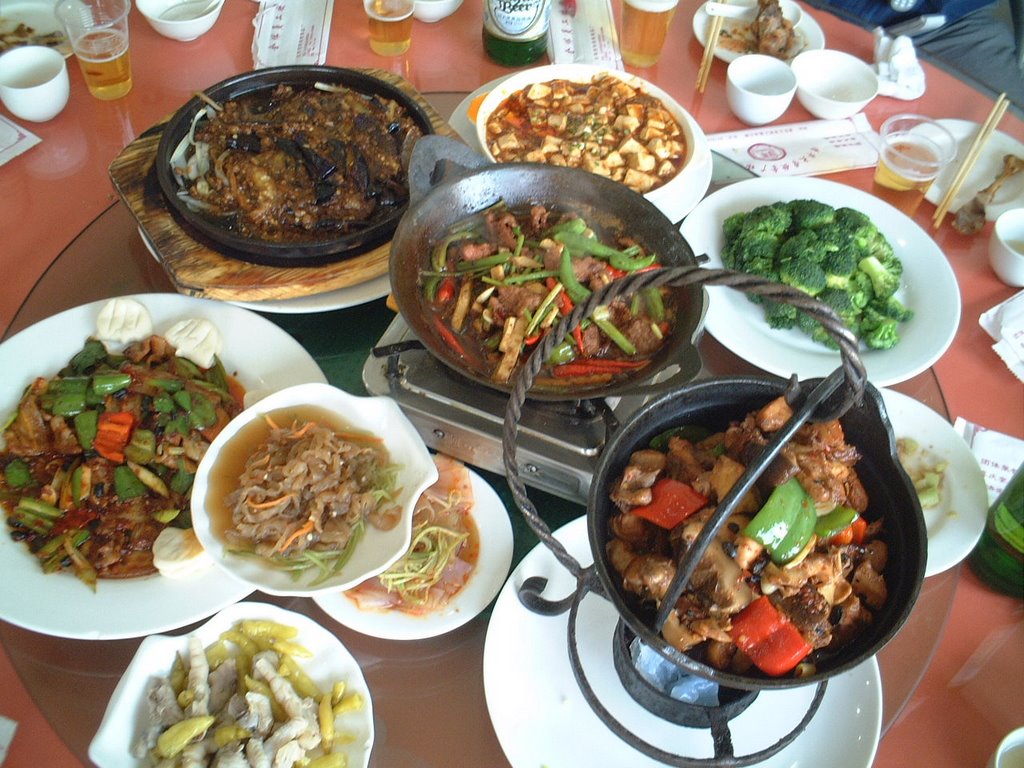
Lunch

In the USA August 21 - September 11

I visited my family in Boston, Massachusetts and Berkeley, California. Here are a couple of pictures.

Sailing on the Charles River, Boston


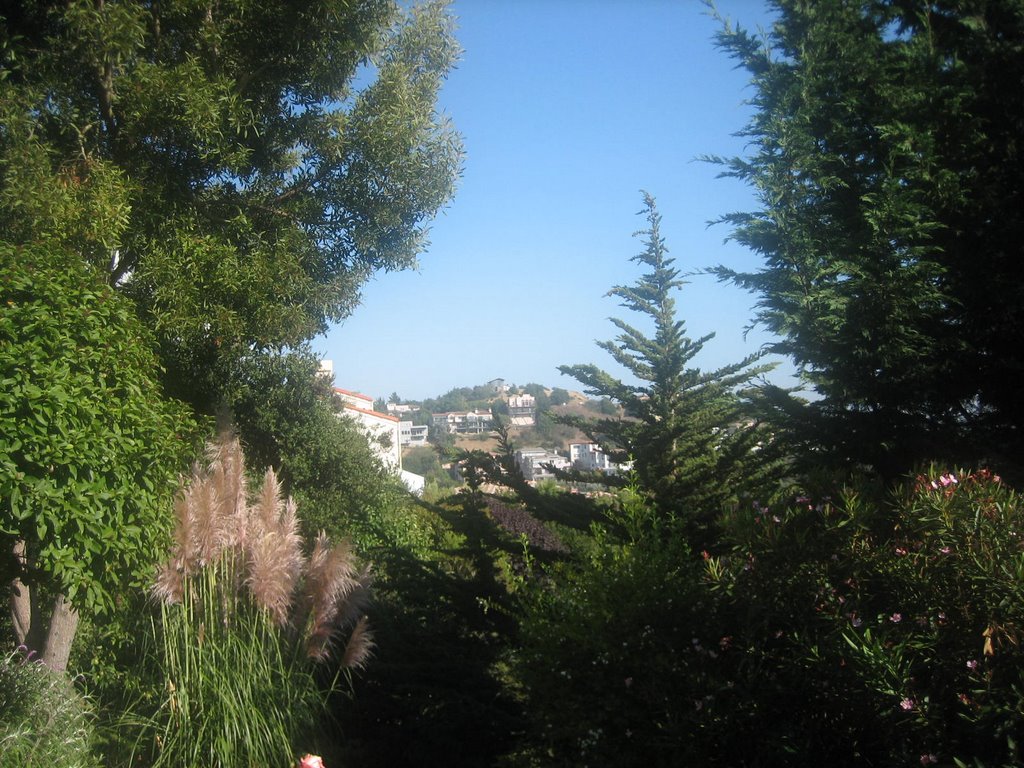
Walking in the hills of Berkeley

Tuesday, August 15, 2006

Two Japanese Movies: "Nana" and "Moyuru Toki"

私は、8年間日本に住んでも日本の映画をあまり見たことがありませんでした。私は、新聞や学術的な論文の日本語は読んでだいたいわかりますが、日本の漫画や映画の日本語はあまり理解できません。このため、私は日本の小説をもっと読んだり日本の映画をもっと見ることにしました。私は先週の週末、二つの映画を借りました。私はどの映画についても聞いたことがありませんでした。一つ目の映画はとてもよかったですが、二つ目の映画は製作した会社に抗議の文書を書きたくなるぐらい酷かったです。
では、一つ目の映画について話します。
その映画は「Nana」という映画でした。この映画の始まりは、二人の二十歳の女子が新幹線で始めて会う。二人とも上京をしています。しかも、二人とも「Nana」という同じ名前があります。しかし、一人のNanaはロック歌手の夢を追っている一方もう一人のNanaは彼氏を追って上京した。映画をまだ見ていない方がいるかもしれないので、私はこれ以上ストーリーについて話しません。
私はこの映画を見るまで、日本のポップ音楽があまり好きじゃなかったが、漸く気に入った日本のポップを聞きました。この歌はロック歌手を演じる中島美嘉の「Glamarous Days」です。このビデオを下記に載せます。


二つ目の映画は「燃ゆるとき」という映画でした。この映画はアメリカのカリフォルニア州でカップラーメンを生産している会社の話をします。私は、この映画が日本とアメリカの文化の違いを超えて成功した会社の話をするというように予想していたが、間違いました。この映画はアメリカの悪いステレオタイプと日本のいいステレオタイプだけを見せて、つまらなかったです。私は2時間がとてももったいないでした。しかも、この映画の演技のレベルが非常に低かったです。例えば、ラーメン工場で働いていた南米系の方が多く出演していました。しかし、この人達がスペイン語で話したとき、けっこ外国の訛がありました。これは、スペイン語は話せない人が南米系の工場職員を演じていたということを意味すると私は思います。

Tuesday, August 08, 2006

About Using Blogs in English Teacher Training

From April to the ending of July, I used blogs together with my 英語科教育法 III class (English Teaching Methodologies 3). Our class blog as well as links to the learners' blogs can be viewed here or on this very page. In the last class I gave the students a questionnaire about their blogging experience. Below are the questions and the students answers. For questions 4, 5, and 6 students wrote out answers rather than circling an answer. I have put students answers for these questions into categories.

Question 1: How often did you write in your blog?
  • Every time and we had an assignment and when I wanted to - 7 students
  • Every time we had an assignment - 7 students
  • Sometimes - 3 students
  • Rarely - 2 students

Question 2: Overall, I would say my blogging experience was:

  • Very interesting - 12 students
  • Interesting - 5 students
  • Hard to judge - 2 students
  • Not so interesting - 0 students
  • Bad - 0 students

Question 3: I would like to continue to blog in the future:

  • Strongly Agree - 3 students
  • Agree - 9 students
  • Neither Agree nor Disagree - 6 students
  • Disagree - 1 student
  • Strongly Disagree - 0 students

Question 4: Please write what was good about your blogging experience

Answer Type 1: Being able to communicate with or learn from other people:

  • Expose my own ideas and communicate with other people who perhaps thousands miles away from my place
  • I can receive response from other people and there are many things what I notice first time. And I can read other people's ideas.
  • Good point was to have some comments from others and they were nice to think over my ideas.
  • I learned a lot because I was able to study English, various people read my blog, and I was very happy when people commented on my blog.
  • We can exchange our thoughts through it.
  • We can share own opinions and I learned a lot from them.
  • It is difficult to write English blog, but when I wrote itm some people were commented so I was very fun!
  • We ETM3 members can know other idea through reading blogs.
  • I could know the statement of another people.

Answer Type 2: English improved

  • I could write my own thinking in English every time. It is hard word, but I think my ability of English improve.
  • I think I could improve my writing skill. I enjoyed sharing opinions each other.
  • I could improve my English writing skills.
  • I had chance to considering story in English that I want to tell people.
  • Blogging improved my English level.

Answer Type 3: Other good points

  • I learned how to make a blog.
  • It was said that we could write what we wanted to write and I enjoyed being able to write freely.
  • I had good experience.
  • I can review the lesson.

Question 5: Please write what was good about your blogging experience:

Answer Type 1: Difficult to write in the blog regularly (Note we wrote in the our blogs almost once a week):

  • When I was busy, I can't write my blog and I don't access to internet from my home. So I can't write in when I wantr to.
  • I noticed that 3rd year students were very busy, so it is difficylt to write a blog every time.
  • I sometimes didn't do blogging assignments by the deadline.
  • It is difficult because I have no PC at my house.
  • Sometimes I wrote in late time.
  • It was hard to write my blog, for I have no computer which can use the internet. So the time is limited.
  • I can't write blog every day.

Answer Type 2: The topic was decided by the teacher too often:

  • I wanted write in the blog not for the sake of doing homework but to write about what I was interested in.
  • At the beginning, it was decided what we would have to write so it was difficult for me to write.

Answer Type 3: The Nature of Blogging

  • It is hard for me to write blog. Blog is so public, I felt shame.

Question 6: How do you think that JH can improve the use of blogs in the future?

Answer Type 1: More free writing

  • More free writing
  • I think it is very good thing. In blog, I can express my opinion and receive responces. The blog gives me many good things.
  • I think you should ask students to write about every things.
  • [My translation] If students were able to write freely in their blogs, I think there would be a lot more enthusiasim about blogging.

Answer Type 2: Class Management and Blogging

  • I think it would be better if blogs were brought up more in the classes.
  • Make the homework deadlines earlier.
  • [My translation] How about students meeting the deadlines?

Answer Type 3: Various suggestions:

  • Put a PC in [the English students' room] because sometimes we cannot use PC in [the computer room].
  • I think if students are more careful about the blog which are viewed by others it would be nice.

Answer Type 4: Do not change anything

  • Very good! It is the good opportunity to write my opinion in English.
  • It's difficult question. I think you don't have to improve the use of blogs for ETM3.
  • I should use blogs for ETM3 in the future.
  • It's good! Keep this style!

My Conclusion on my second blogging project:

What does this all mean? One, I should consider more free writing... There is much more that I could write but it is time for me to leave work and go home! The swings are beckoning my son and I. I have to start working on another project tomorrow, so I will not be able to finish writing this until next week. Stay tuned.

New Webpage on Vocabulary Notebooks

On August 4, I made a presentation at the All-Japan English Education Conference titled "An Investigation on How Vocabulary Notebooks can be used Effectively in EFL Contexts in Japan". The train from Morioka to Kochi city took almost 12 hours! First, I took the bullet train from Morioka to Tokyo but we were delayed 50 minutes because some dummy ran onto the train tracks. As a result of this, JR (Japan Railways) stopped all the bullet trains and searched the tracks for 50 minutes to make sure that there was no one else out there (I think). After I arrived in Tokyo station, I took the bullet train from Tokyo to Okayama and finally a normal train from Okayama to Kochi City. The highlight of the last train ride was crossing the 瀬戸大橋 or the Seto Bridge. (See the picture I downloaded from Wikipedia below:)


As I had been so busy with work at the university, I was not able to prepare for the presentation until the last second. I did not start practicing my presentation until I had arrived at Kochi and eaten dinner. The presentation at the conference actually did not go so badly but there were some thing that I wanted to say that I did not. I have made a webpage which outlines all the research I have done on vocabulary notebooks these past few months. Eventually, I will write two papers from this research:
1) A proposal on how to use vocabulary notebooks in class - grounded on theory and practice

and

2) What effects can the use of vocabulary notebooks have on the word learning strategies that students use?

I hope that the webpage I have put on the internet will be of service to teachers interested in vocabulary learning. The webpage can be accessed here.

Friday, July 21, 2006

Vocabulary Notebooks Revisited

This year I introduced vocabulary notebooks into two of my classes (A university freshman English class and a Nursing School English class). As I wrote before, the primary reason for doing so was to encourage students to learn the words they encountered in class and also learn how to use them. Last year, I had observed that many students' notebooks for the classes consisted of a pile of handouts I had given them throughout the semester and some scriblings. These students received 10 and 20 percents on tests and one of the primary reasons was that they had no idea how to review for a test. I realized that I should be trying to help these kids develop study habits so I introduced vocabulary notebooks.

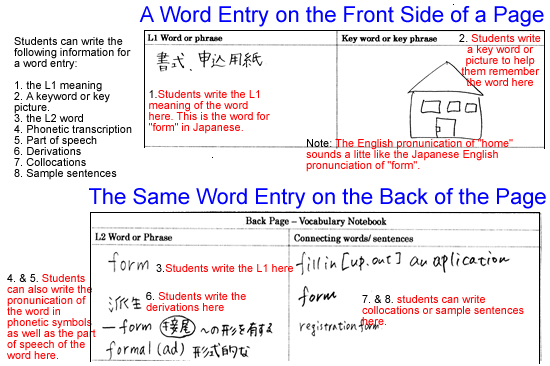
For one entry students can write the following information about a work:
1. the L1 meaning
2. A keyword or key picture.
3. the L2 word
4. Phonetic transcription
5. Part of speech
6. Derivations
7. Collocations
8. Sample sentences

To see an actual word entry from a student, please click here. In two weeks I will be presenting about this project at the zenkokueigokyouikugakkai or the Japan Society of English Education Conderence in Kouchi. There has actually been very little research done to investigate how students record words in their notebooks. At the conference I will be talking about the following:
1. Did the students use new word learning strategies develop through using the vocabulary notebooks?
2. Did students actually use the vocabulary notebooks, if so, how?
3. Through this experience, what tips can be given to teachers about the use of vocabulary notebooks?
4. What further issues of investigation have arisen from this study?

To prepare for this presentation, I will be periodically posting to this blog in the next two weeks. I hope I can finish by the time the conference roles around!

Tests that Encourage Students to Learn

As I have written before, I teach an English class at a nursing school (Please see the worst dialogue ever made for nurses for reference). This is my second year teaching the class. One of the problems I had last year was that about 10 of the 40 students consistently got 10 and 20 percents on tests and quizes. As a teacher there is nothing worse than having to mark a blank test page. I would always wonder why the student gave up on the class and what I could have done differently.
This year, although I have not stopped tests and quizes I have stopped marking them. Rather, I have the students mark them. After the students mark their tests and quizes I ask them to give them to me and I write comments on them. I have also told the students that I will not record their grades. The tests and quizes are designed to record how much they are improving and I want them to study hard so that they will improve.
The other day in the nursing school class we had a mid-term examination. The exam had 4 parts. I gave the students a time limit to complete each part and then we went over the answers together with the students correcting their own tests. Students then evaluated their own performance on the test and wrote about how they might be able to improve. A handful of students left one or two parts of the test blank. When we went over the answers, they did write in the answers and wrote in the comment section of their test that they did not study for the test and that they would study harder next time. Although not ideal, this is much better than receiving a blank test from a student.
I remember when I was studying Japanese. Whenever I was returned a graded test I would look at the score and never the teacher's corrections. The only time I would look at the comments/corrections of the teacher was if I had a good score. Because I usually studied hard for a test, and test scores were very influential on my course grade, a bad score was like a slap in the face. Now, I regret not looking at the tests because I had absolutely wonderful professors who wrote very helpful comments on the tests.
The point of a test should be to help the student determine how much of the class he/she had understood and to understand his/her progress. With grades, I believe, tests lose their value.

Thursday, July 06, 2006

The Danger of Focusing too much on Cultural Differences

This time of year is always very stressful for me. Although it is a busy time of year as I have a full courseload, research to present in August right after the semester ends, university committees to serve on, a 21 month son at home, and a trip to the US to plan after my presentation is finished, this is not a source of my stress. The source of my stress lies in the two weeks I devote in my "Meeting of Multicultural Educators" class at university to studying the "national values" of other countries. Professor Geert Hofstede, classifies national values into five dimensions: power distance, individualism vs. collectivism, masuculinty vs. femininity, uncertainty avoidance, and long term orientation vs. short term orientation. Approximately 76 countries/ regions have been ranked on the degree to which they show characteristics of each dimension. For example Uncertainty Avoidance is defines as reflecting "the extent to which a society attempts to cope with anxiety by minimizing uncertainty. Cultures that scored high in uncertainty avoidance prefer rules (e.g. about religion and food) and structured circumstances, and employees tend to remain longer with their present employer."(from Wikipedia (2006). Geert Hofstede.)
Many of my students, who are of course Japanese, seem to prefer structured situations to unstructured situations and hesitate to ask open-ended questions. Conversely, when I was a student in the USA it seems that a majority of the questions I was asked were open-ended. Furthermore, when a teacher asked a question to the class I would raise my hand and try to guess the answer even if I was only 50% certain that I knew the answer. In terms of uncertainty avoidance, Japan scores much higher that the US. Although Hofstede's theory is not without its critics and problems, I find it a fascinating way to look at the national cultures of various countries and also helpful. If a teacher knows that the students he will teach are more likely to handle open-ended questions differently than the students from his home country, he will not put his students in uncomfortable situations as frequently nor will he feel frustration when a student does not answer his question.
Nevertheless, when I study Hofstede's national values I start feeling melancholic; I am ready to jump on the boat and cross the Pacific to the U.S. Why? I think the reason is that I start to think too much of the differences between the U.S. and Japan and start feeling culture shock. My surroundings become unfamiliar and I develop the urge to be back in my familiar environment where peoples' behavior makes sense to me. After the two weeks with Hofstede end, I seem to get reaccustomed to Japan and stop thinking about the differences between it and my home country.